One moment
We’re getting things ready for you.
We’re getting things ready for you.
Learn more about GHK-Cu, including what it is, how it works, what it has been studied for, safety considerations, and how clinician-supervised treatment works through ElliotMeds.
Prescription requires licensed-provider review. No guaranteed outcomes.
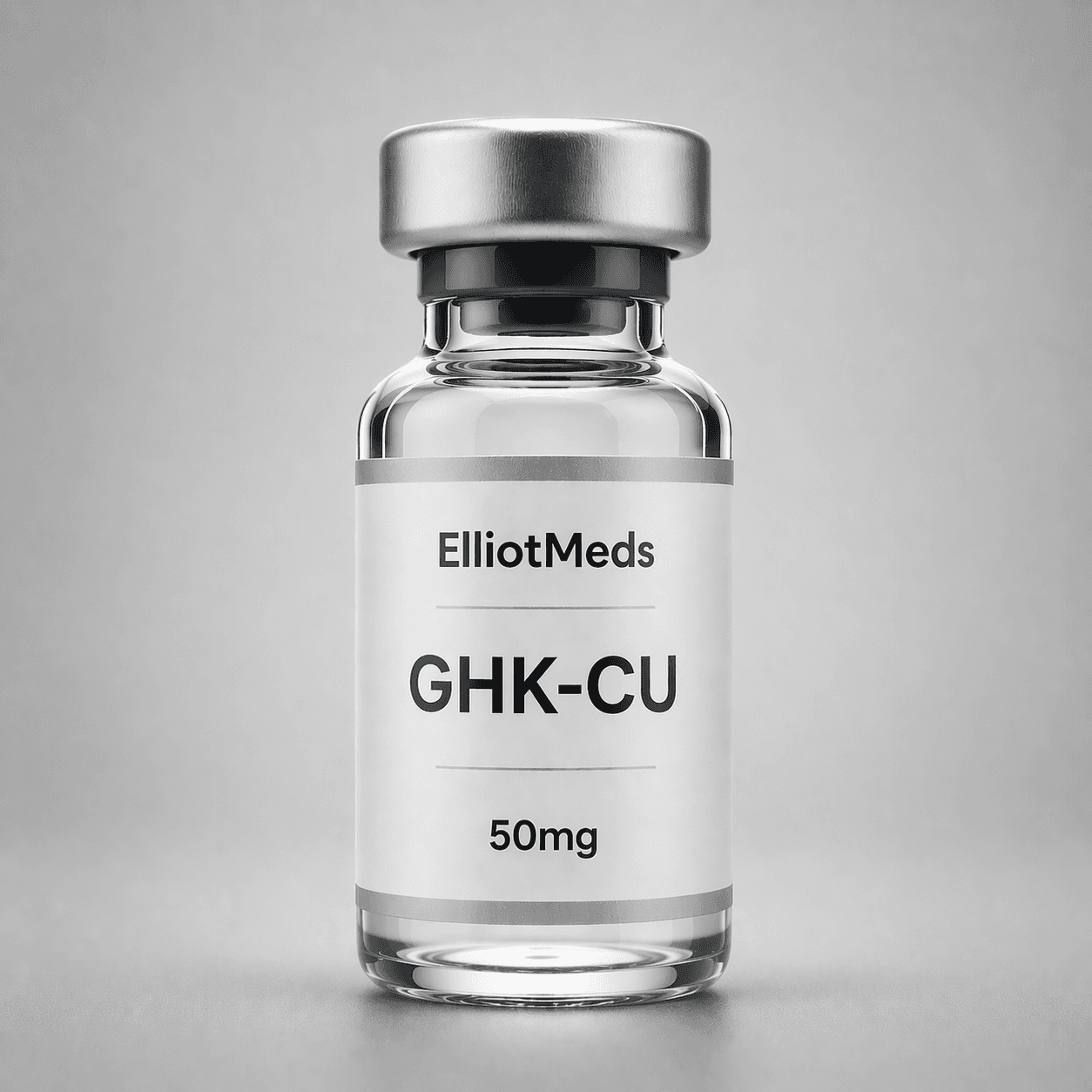
Ready to get started? View GHK-CU pricing, dosage options, and start a provider chart review on the treatment page.
View Treatment OptionsGHK-Cu is a naturally occurring copper-binding peptide widely discussed in skin, collagen, and tissue-remodeling contexts. This page explains what it is and how clinician-supervised programs through ElliotMeds work. It is educational and not medical advice.
Last updated: July 2, 2026
GHK-Cu is a naturally occurring copper-binding tripeptide — glycyl-L-histidyl-L-lysine complexed with copper. It is discussed for skin quality, collagen, hair, and tissue remodeling. Topical cosmetic use and injectable wellness use have very different risk profiles; injectable GHK-Cu is not FDA-approved for anti-aging or skin rejuvenation.
GHK-Cu is studied for signaling related to collagen, elastin, glycosaminoglycans, fibroblast activity, antioxidant pathways, and tissue remodeling. Much of the strongest consumer use is topical/cosmetic; for injectable use, the evidence base is more limited. It is not a guaranteed outcome.
GHK-Cu has research and reviews discussing skin remodeling, wound healing, collagen and elastin pathways, anti-inflammatory and antioxidant effects, and tissue repair — much of it topical. Injectable use has less human safety data. It is not FDA-approved for these uses.
The cosmetic-versus-drug boundary is sharp for GHK-Cu: topical cosmetic products are a different regulatory category from an injectable used with therapeutic intent. Injectable GHK-Cu is not FDA-approved, and the FDA has noted limited human data and concerns around immunogenicity and impurities for injectable GHK-Cu. Compounding availability is subject to that status.
Use is provider-directed only; no skin, anti-aging, or hair outcome or timeline is promised, and effects are individual and unverified for these purposes.
Many patients begin with a lower starting option so a licensed clinician can evaluate tolerance, medical history, goals, and safety factors before any adjustments are considered. The starting option shown below is informational and reflects available program data, not self-directed dosing instructions. Final medication, dose, frequency, and treatment plan are determined by a licensed clinician.
Average starting option
Available options
Provider note: Do not change dose, frequency, or route of use unless directed by your clinician.
Important note
Some treatments may involve compounded medications when prescribed by a clinician. Compounded medications are not FDA-approved. The FDA does not evaluate compounded medications for safety, effectiveness, or quality before marketing.
A clinician reviews copper-related and liver considerations, allergies, skin goals, wound status, pregnancy status, medications, and whether topical options are more appropriate, before considering injectable GHK-Cu.
GHK-Cu is a copper-binding peptide distinct from GH-pathway or recovery peptides; topical formulations differ substantially in risk from injectable use. None is presented as superior, and a clinician determines what, if anything, fits.
Injectable GHK-Cu is not FDA-approved for these uses; topical cosmetic use is a separate category. No peptide is "safe" without qualification.
Topical/cosmetic use has the most consumer data; injectable use has more limited human safety data.
It is studied for collagen and skin-remodeling signaling; outcomes are individual and unverified for these purposes.
No — a licensed clinician decides.
Disclaimer
Although the information on this page is based on available educational research and product information, it is provided for informational purposes only and is not medical advice. Treatment decisions, medication selection, dosing, and eligibility are determined by a licensed clinician after review. Not all patients are candidates, and individual results may vary. Use medications only as directed by your clinician.
Next step
Begin by reviewing the treatment option and completing the secure provider chart review process.