NAD+ Treatment Guide
NAD+ is a coenzyme found in every living cell, where it carries electrons in the reactions that convert food into usable energy. Injectable NAD+ is compounded and prescribed by licensed clinicians in some healthy-aging programs. It is not a peptide, and no NAD+ drug product has been approved by the FDA for any medical use.
Prescription requires licensed-clinician review. No guaranteed outcomes.
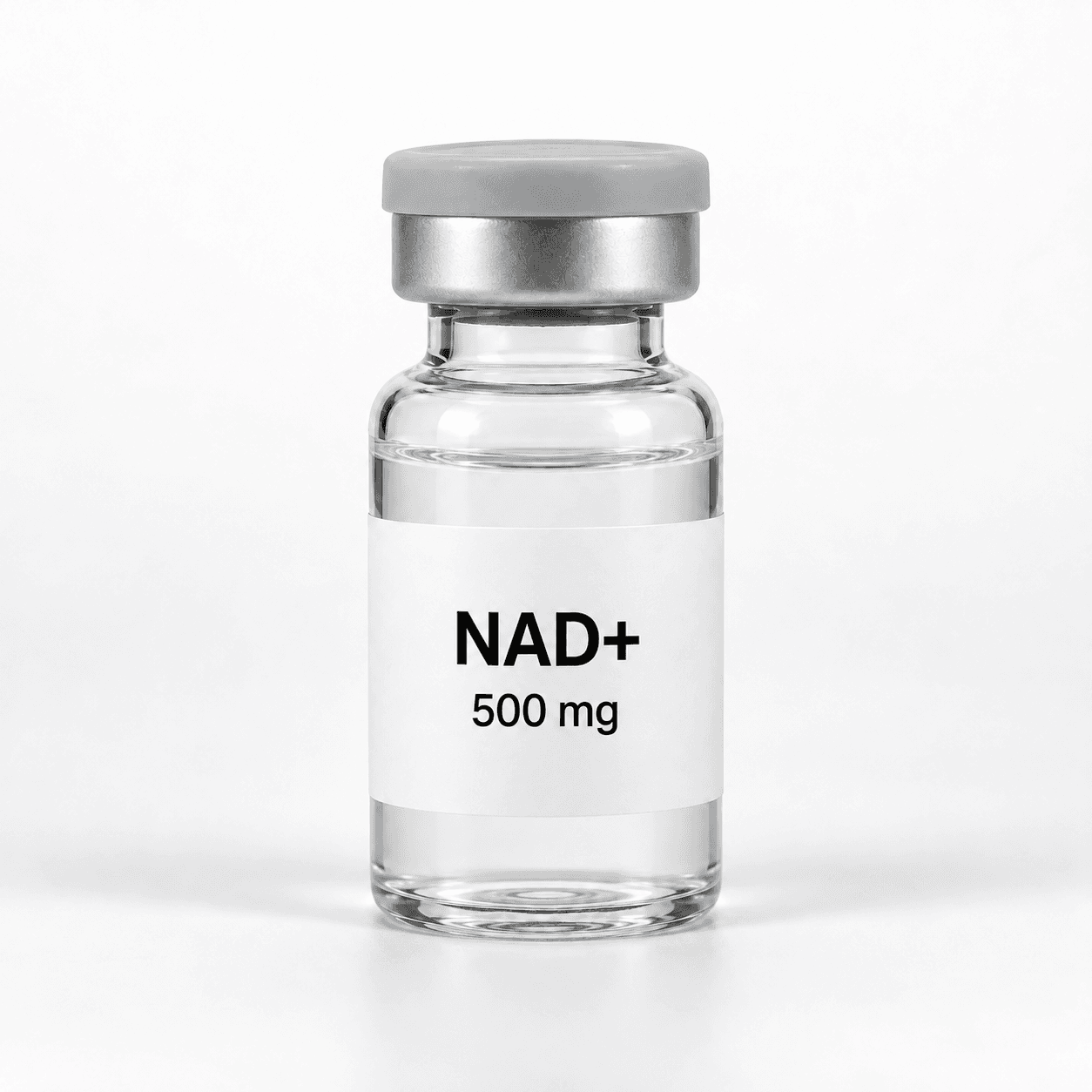
Ready to get started? View NAD+ pricing, dosage options, and start a clinician chart review on the treatment page.
View Treatment OptionsNAD+ (nicotinamide adenine dinucleotide) is a coenzyme present in every cell, involved in energy metabolism and DNA repair. This page explains what it is, what the evidence does and does not show, and how clinician-supervised programs through ElliotMeds work. It is educational and not medical advice.
Last updated: July 17, 2026
What Is NAD+?
NAD+ stands for nicotinamide adenine dinucleotide. It is a coenzyme — a helper molecule that enzymes need in order to work — and it is present in every cell in the body. NAD+ is not a peptide. Peptides are short chains of amino acids. NAD+ is a dinucleotide, built from two nucleotides joined together, and belongs to a different chemical family entirely. The body makes its own NAD+, primarily from vitamin B3 in the diet, and recycles it continuously. Tissue NAD+ levels have been observed to decline with age in laboratory studies, which is the observation most interest in NAD+ is built on.
How It Works
NAD+ has two broad roles in cells. The first is metabolic. NAD+ cycles between an oxidized form (NAD+) and a reduced form (NADH), shuttling electrons through the reactions that produce ATP, the cell's energy currency. Without NAD+, those reactions stop. The second is regulatory. NAD+ is consumed as a substrate by enzymes including sirtuins and PARPs, which are involved in DNA repair and gene regulation. Because these enzymes use NAD+ up rather than recycling it, their activity depends on how much is available. What is not established is whether raising NAD+ by injection changes any of this in a way that produces a clinical benefit in humans. That is the gap between the biochemistry, which is well described, and the therapeutic claims, which are not.
What It’s Studied For
Research on NAD+ and its precursors has looked at aging, metabolic function, neurodegenerative disease, and substance-use disorders. Most of this work is preclinical — cell cultures and animal models — or consists of small, short human trials, often of oral precursors such as nicotinamide riboside or nicotinamide mononucleotide rather than injected NAD+ itself. There are no large, randomized, controlled trials establishing that injectable NAD+ improves any clinical outcome, and no NAD+ drug product has been approved by the FDA for any indication.
Regulatory Status
No NAD+ drug product is FDA-approved for any indication. NAD+ appears in Category 1 of the FDA's list of bulk drug substances nominated for use in compounding under section 503A — substances the agency is still evaluating. Under the FDA's interim policy, FDA does not intend to take action against compounding with Category 1 substances, subject to the conditions in that policy. Compounded NAD+ has not been evaluated by the FDA for safety, effectiveness, or quality before marketing. In 2019 the FDA proposed a rule that would not include NAD on the final 503A bulks list; that rule has not been finalized. Availability is subject to this status and may change.
How It May Be Used in a Clinician-Supervised Program
Through ElliotMeds, NAD+ is available only after a licensed clinician reviews your medical intake and determines that a program is appropriate. The clinician decides the medication, the strength, and whether to prescribe at all — and may decline. If prescribed, NAD+ is compounded and dispensed by a licensed U.S. pharmacy. Compounded medications are not FDA-approved, and the FDA does not evaluate them for safety, effectiveness, or quality before marketing. Nothing on this page guarantees prescribing, approval, or any specific outcome.
What to Expect
Use is clinician-directed only. No energy, cognitive, longevity, or disease outcome is promised, and no timeline is implied. Effects are individual and are not established for these purposes.
Preferred Starting Options / Dosing Notes
Many patients begin with a lower starting option so a licensed clinician can evaluate tolerance, medical history, goals, and safety factors before any adjustments are considered. The starting option shown below is informational and reflects available program data, not self-directed dosing instructions. Final medication, dose, frequency, and treatment plan are determined by a licensed clinician.
Average starting option
- 500 mg
Available options
- 500 mg
- 1000 mg
Clinician note: Do not change dose, frequency, or route of use unless directed by your clinician.
Safety Considerations
- No NAD+ product is FDA-approved for any medical use. Compounded NAD+ has not been evaluated by the FDA for safety, effectiveness, or quality before marketing.
- Reported effects of NAD+ injection include nausea, cramping, flushing, headache, fatigue, and chest tightness. Injection-site tenderness, swelling, and bruising are common.
- These effects are strongly rate-dependent — administering NAD+ too quickly is the usual reason people feel unwell during it.
- Because there are no large controlled trials, the long-term safety of repeated NAD+ administration is not established.
- Tell your clinician about all medications, supplements, and medical conditions, including pregnancy or breastfeeding, before starting any NAD+ program.
- NAD+ is not a treatment for any disease. If you have symptoms that concern you, see a licensed clinician for evaluation rather than self-treating.
Important note
Some treatments may involve compounded medications when prescribed by a clinician. Compounded medications are not FDA-approved. The FDA does not evaluate compounded medications for safety, effectiveness, or quality before marketing.
Who Is Not a Candidate
Because NAD+ has not been studied in controlled trials, a clinician will generally decline to treat in situations where safety cannot be assessed. These include pregnancy or breastfeeding; a known allergy to NAD+ or to any component of the injectable preparation; active or recent cancer, because NAD+ participates in cellular metabolism and its effect on tumor cells is not established; significant heart disease, given the chest tightness and flushing reported during administration; and significant liver or kidney impairment, because how NAD+ is cleared in those populations has not been characterized. Disclose all conditions, medications, and supplements during your intake.
Frequently Asked Questions
Is NAD+ a peptide?
No. NAD+ is a dinucleotide coenzyme. Peptides are short chains of amino acids; NAD+ is built from two nucleotides. They are chemically unrelated and work by different mechanisms.
Is NAD+ FDA-approved?
No. There is no FDA-approved NAD+ drug product for any indication. NAD+ appears on the FDA's list of bulk drug substances under evaluation for use in pharmacy compounding, which means the agency is still reviewing it. Compounded NAD+ is not FDA-approved.
What is the difference between NAD+, NR, and NMN?
NR (nicotinamide riboside) and NMN (nicotinamide mononucleotide) are precursors — molecules the body converts into NAD+. They are usually taken orally and sold as supplements. NAD+ itself is the finished coenzyme. Most published human research has studied the oral precursors, not injected NAD+.
Why is NAD+ injected rather than taken by mouth?
NAD+ is a large, highly charged molecule that is poorly absorbed from the gut, so oral NAD+ delivers little to the bloodstream. That is the rationale offered for injection. Whether injection produces a clinical benefit is a separate question, and it has not been established in large controlled trials.
Does NAD+ increase energy or reverse aging?
NAD+ is essential to the reactions that produce cellular energy, and its levels decline with age in laboratory studies. Neither fact establishes that NAD+ injections increase energy or slow aging in humans. No product is approved for either use, and no large controlled trial supports the claim.
References
- Peer-reviewed literature on nicotinamide adenine dinucleotide (PubMed / MedlinePlus)
- FDA, Bulk Drug Substances Nominated for Use in Compounding Under Section 503A (Category 1)
Disclaimer
Although the information on this page is based on available educational research and product information, it is provided for informational purposes only and is not medical advice. Treatment decisions, medication selection, dosing, and eligibility are determined by a licensed clinician after review. Not all patients are candidates, and individual results may vary. Use medications only as directed by your clinician.
Continue learning
Next step
Ready to start a clinician chart review?
Begin by reviewing the treatment option and completing the secure clinician chart review process.