CJC-1295 / Ipamorelin Peptide Guide
Learn more about CJC-1295 + Ipamorelin, including what it is, how it works, what it has been studied for, safety considerations, and how clinician-supervised treatment works through ElliotMeds.
Prescription requires licensed-provider review. No guaranteed outcomes.
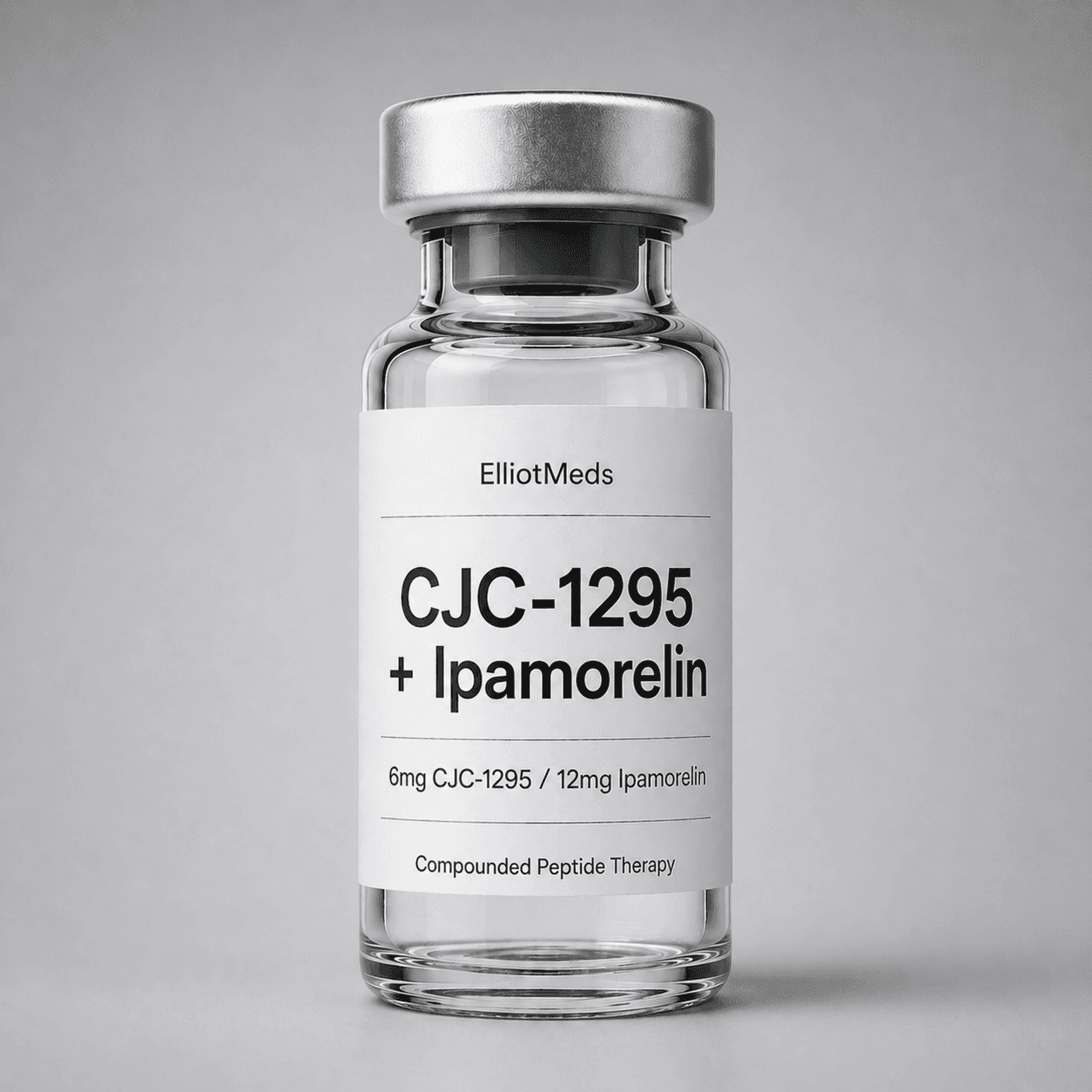
Ready to get started? View CJC-1295 / Ipamorelin pricing, dosage options, and start a provider chart review on the treatment page.
View Treatment OptionsCJC-1295 and Ipamorelin are peptides often combined in wellness settings for growth-hormone-pathway support. This page explains what they are and how clinician-supervised programs through ElliotMeds work. It is educational and not medical advice.
Last updated: July 2, 2026
What Is CJC-1295 / Ipamorelin?
This is a compounded blend of two peptides. CJC-1295 is a long-acting growth-hormone-releasing-hormone (GHRH) analog studied for stimulating the body's own growth-hormone (GH) and IGF-1 signaling. Ipamorelin is a selective GH secretagogue that acts at the ghrelin/GH-secretagogue receptor. This combination is not an FDA-approved therapy for general wellness, muscle growth, anti-aging, or recovery.
How It Works
CJC-1295 is intended to stimulate the GHRH pathway while ipamorelin acts through the GH-secretagogue receptor; the goal is to support the body's own pulsatile GH release rather than administering growth hormone directly. Research suggests these mechanisms in pharmacology studies, but robust human outcome evidence for wellness, muscle, and recovery claims is limited. It is not a guaranteed outcome.
What It’s Studied For
CJC-1295 has been studied in healthy adults for pharmacokinetic/pharmacodynamic effects on GH and IGF-1; ipamorelin has pharmacologic and preclinical data as a selective GH secretagogue. The combination has far less human outcome data than FDA-approved medications, and the FDA has identified peptide-characterization and safety concerns for CJC-1295 and ipamorelin-related substances. It is not FDA-approved for these uses.
What to Expect
Any use is framed only as provider-directed support, not a guaranteed result or timeline. Effects, if any, are individual and unverified for these purposes. This program promises no specific outcome.
Preferred Starting Options / Dosing Notes
Many patients begin with a lower starting option so a licensed clinician can evaluate tolerance, medical history, goals, and safety factors before any adjustments are considered. The starting option shown below is informational and reflects available program data, not self-directed dosing instructions. Final medication, dose, frequency, and treatment plan are determined by a licensed clinician.
Average starting option
- 3 mL
Available options
- 3 mL
- 5 mL
Provider note: Do not change dose, frequency, or route of use unless directed by your clinician.
Safety Considerations
- Reported effects include injection-site reactions, headache, flushing, water retention, and numbness/tingling.
- There are possible effects on glucose metabolism and theoretical risks from chronically elevated IGF-1.
- Product purity and impurities are a concern with compounded or non-approved peptides, and the FDA has flagged CJC-1295 and ipamorelin acetate on characterization/safety grounds.
- No peptide is "safe" without qualification.
Important note
Some treatments may involve compounded medications when prescribed by a clinician. Compounded medications are not FDA-approved. The FDA does not evaluate compounded medications for safety, effectiveness, or quality before marketing.
Who Is Not a Candidate
Personal history of cancer or active malignancy, uncontrolled diabetes, and pregnancy/breastfeeding warrant particular caution; a clinician also reviews IGF-1/GH concerns, glucose status, edema/fluid retention, sleep apnea, cardiovascular risk, and your full medication list, and may determine it is not appropriate.
How It Compares
Ipamorelin alone acts only at the GH-secretagogue receptor; adding CJC-1295 introduces a GHRH-analog component. Both differ from GH-axis peptides such as tesamorelin and sermorelin. None is presented as superior, and a clinician determines what, if anything, is appropriate.
Frequently Asked Questions
Is CJC-1295/Ipamorelin FDA-approved?
No — it is not FDA-approved for wellness, muscle, anti-aging, or recovery use.
What is the difference between a GHRH analog and a GH secretagogue?
A GHRH analog (CJC-1295) stimulates the GHRH pathway; a GH secretagogue (ipamorelin) acts at the ghrelin/GH-secretagogue receptor.
What are the side effects?
Injection-site reactions, water retention, headache, flushing, and possible glucose/IGF-1 effects.
How long until results?
No outcome or timeline is promised; use is provider-directed only.
Does payment guarantee a prescription?
No — a licensed clinician decides.
References
- Peer-reviewed pharmacology literature on CJC-1295 and ipamorelin (PubMed)
- FDA compounding-safety communications on peptide characterization
Disclaimer
Although the information on this page is based on available educational research and product information, it is provided for informational purposes only and is not medical advice. Treatment decisions, medication selection, dosing, and eligibility are determined by a licensed clinician after review. Not all patients are candidates, and individual results may vary. Use medications only as directed by your clinician.
Continue learning
Next step
Ready to start a provider chart review?
Begin by reviewing the treatment option and completing the secure provider chart review process.